
Finger Tape: Don't Let Your Hands Fail You
Why Your Hands Deserve Better Than Cheap Tape
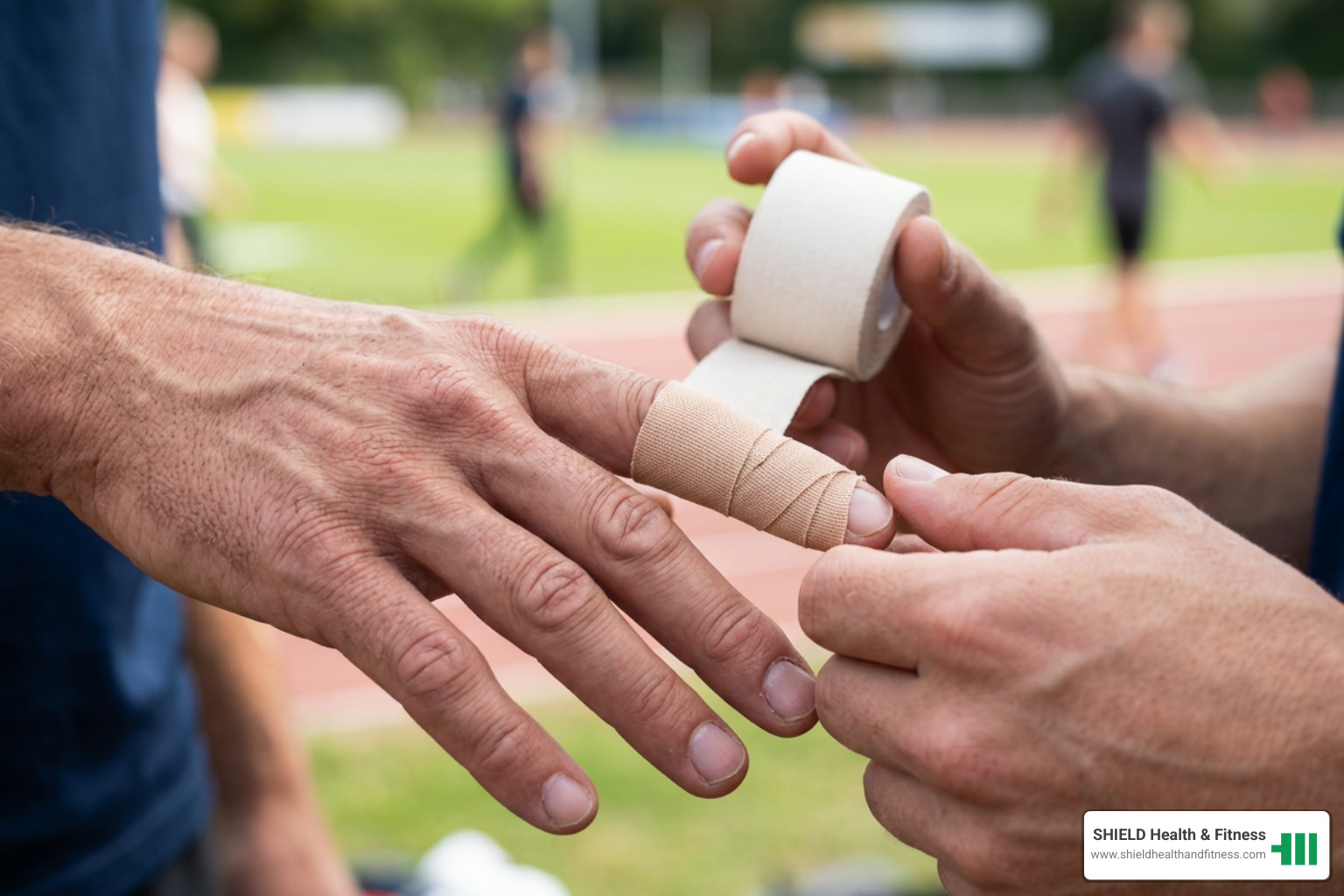
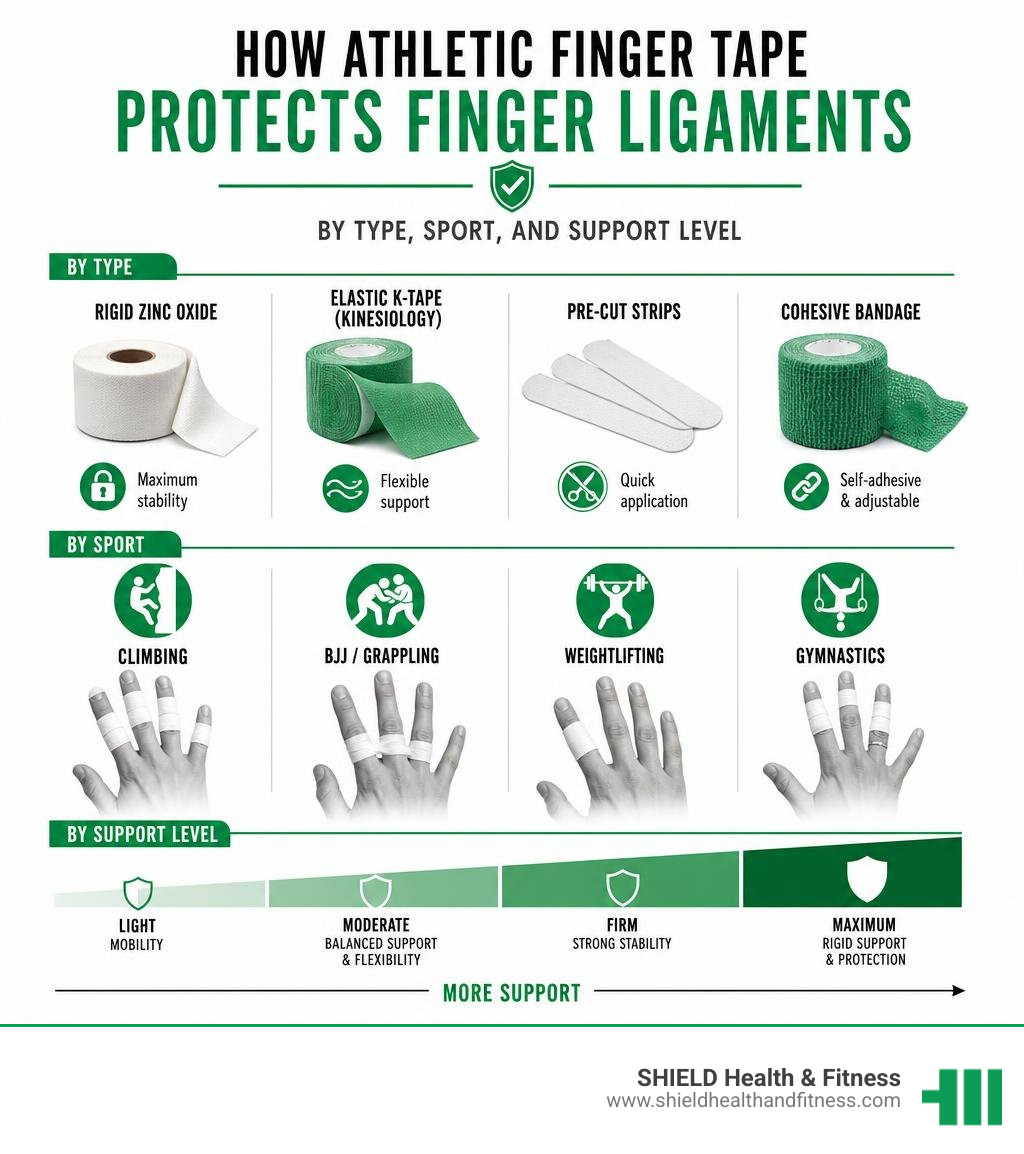
Athletic finger tape is a specialized sports tape used to protect, support, and stabilize fingers during high-intensity training and competition. Here are the best options to know about:
| Tape Type | Best For | Key Feature |
|---|---|---|
| Rigid Zinc Oxide | Climbing, BJJ, weightlifting | Maximum joint support, no stretch |
| Elastic K-Tape (Kinesiology) | Gymnastics, dynamic movement | Flexible, preserves range of motion |
| Pre-Cut Strips | CrossFit, barbell work | Convenient, no scissors needed |
| Cohesive Bandage | General wrapping, buddy taping | Self-adhesive, easy to adjust |
Your fingers take a beating. Climbers drag them across rough rock faces. Grapplers have them bent sideways during live rolls. Weightlifters tear calluses on knurled bars, rep after rep. And yet, fingers are often the last thing athletes think to protect — until something goes wrong.
The right tape can mean the difference between finishing a session strong and sitting on the sideline with a sprained or strained finger joint. With over 9,000 finger tape products on Amazon alone, though, it's hard to know what actually works.
This guide cuts through the noise. We compare tape types, materials, and top options so you can find what fits your sport, your sweat level, and your hands.
I'm Josh Key, a performance and recovery specialist at SHIELD Health and Fitness with hands-on experience testing athletic finger tape with elite athletes — from Spartans to professional skiers to competitive climbers. I'll help you make a smart, informed choice before we dig into the full breakdown below.
Why Athletes Rely on Athletic Finger Tape
When you are performing at your limit, your hands are your primary point of contact with the world. Whether you are holding onto a microscopic granite crimp, locking in a collar grip on a heavy cotton gi, or wrapping your hands around a cold steel barbell, your fingers bear a disproportionate amount of load.
Without proper stabilization, the tiny ligaments, tendons, and joint capsules in your hands are highly vulnerable to acute trauma and chronic overuse injuries.

Using high-quality athletic finger tape serves several critical physiological purposes:
- Joint Stabilization: Tape acts as an external skeleton for your digits. By wrapping the joints, you reinforce the collateral ligaments and tendon pulleys (specifically the A2 and A4 pulleys in the fingers), preventing them from bowing or rupturing under high mechanical stress.
- Friction Reduction and Skin Protection: Repetitive friction against rough surfaces like climbing chalk, gym ropes, or knurled barbells quickly wears down the epidermis. Taping hot spots before they blister keeps your skin intact so you do not have to cut your training sessions short.
- Optimizing Range of Motion: While we want to protect the joints, we do not want to completely freeze the hand. Proper taping techniques limit only the dangerous, injury-prone angles of movement (like hyper-extension or lateral twisting) while allowing you to maintain a natural, powerful grip.
To understand how to keep your hands safe, it is highly beneficial to look into structural Climbing Finger Injury Prevention strategies. By combining targeted taping with smart load management, you can build resilient hands that never back down from a challenge.
How Different Sports Use Finger Tape
Every sport places a unique mechanical demand on your hands. Consequently, how you apply and utilize your tape will depend entirely on what you are training for.
Rock Climbing and Bouldering
Climbers are perhaps the most notorious users of finger tape, and for good reason. When pulling on "crimps" (very small horizontal edges), the force exerted on the finger pulleys can exceed the structural limits of the tissue. Climbers use narrow, rigid tapes to wrap the proximal and middle phalanges. This provides direct mechanical reinforcement to the tendon pulleys. Additionally, climbers use tape to cover split tips and cuts, allowing them to keep climbing on rough rock without painting the wall red.
Weightlifting and Functional Fitness
In Olympic weightlifting, powerlifting, and CrossFit, the "hook grip" is king. By wrapping your thumb around the bar and trapping it under your fingers, you secure your grip for heavy pulls. However, this creates immense friction on the thumbs. Weightlifters wrap their thumbs with flexible, high-grip tape to prevent painful blisters and skin tears while maintaining the proprioceptive feedback needed to control the bar.
Gymnastics and Calisthenics
Gymnasts spend hours swinging on high bars, rings, and parallel bars. The constant rotation of the hands around the wooden or fiberglass bars creates massive shear forces. Gymnasts use tape to build custom "grips" or wrap their wrists and fingers to reinforce the skin against painful rips and calluses, often pairing the tape with heavy amounts of chalk.
Brazilian Jiu-Jitsu (BJJ) and Judo
Grappling sports require constant, intense pulling on heavy fabric. Over time, the repetitive gripping, breaking of grips, and lateral twisting forces can lead to chronic joint laxity, osteoarthritis, and acute sprains. BJJ fighters use rigid tape to cross-tape their knuckles (known as X-taping) to prevent their fingers from being forced into hyperextension or unnatural lateral rotation. To dive deeper into the specific wrapping strategies for grapplers, check out our comprehensive guide on BJJ Finger Tape.
Choosing the Right Tape: Rigid Zinc Oxide vs. Elastic K-Tape
Choosing the wrong tape can ruin your workout. If your tape is too stiff, you will lose the dexterity needed for precise movements. If it is too stretchy, it will fail to provide the structural support your joints need.
Here is a side-by-side comparison of the two primary categories of athletic finger tape:
| Feature | Rigid Zinc Oxide Tape | Elastic Kinesiology Tape (K-Tape) |
|---|---|---|
| Material | 100% Inelastic Cotton | Cotton/Spandex or Synthetic Blend |
| Stretchability | 0% (Completely rigid) | 130% to 180% elasticity |
| Primary Purpose | Joint immobilization & structural support | Dynamic support, pain relief, circulation |
| Adhesive Type | Heavy-duty Zinc Oxide (sweat-resistant) | Acrylic adhesive (long-wear, water-resistant) |
| Breathability | Moderate (often porous to wick moisture) | High (lightweight, quick-drying) |
| Latex-Free | Usually (check manufacturer specs) | Almost always latex-free |
Stiff Zinc Oxide: The Best Athletic Finger Tape for Maximum Support
If your goal is to immobilize a joint, protect a healing sprain, or reinforce your fingers against heavy loads, rigid zinc oxide tape is your best option.
Made from tightly woven, inelastic cotton, this tape does not budge. The "zinc oxide" refers to the adhesive formulation, which is highly skin-friendly, incredibly sticky, and chemically stable across wide temperature ranges.
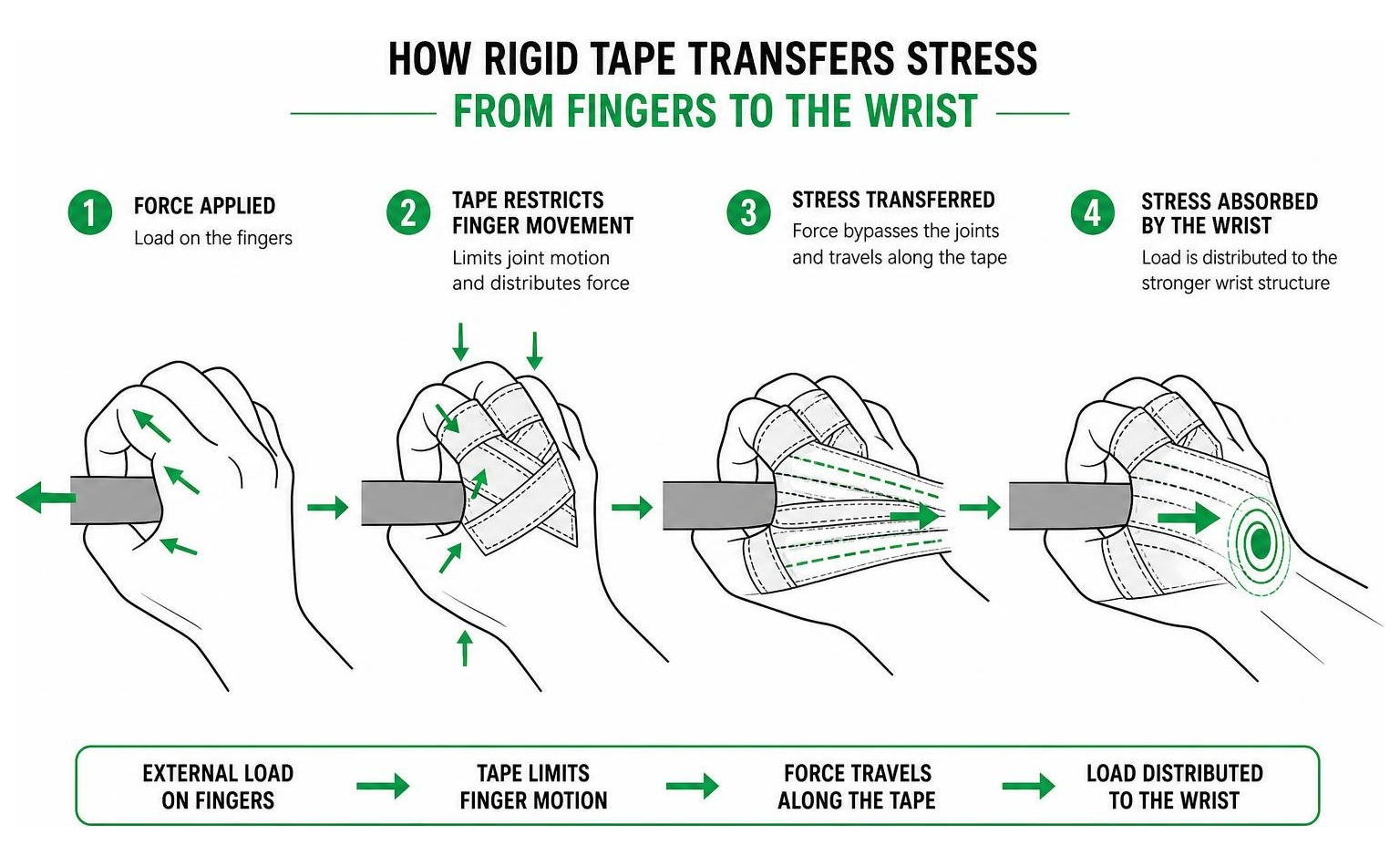
This rigid construction is exactly what you need for heavy lifting and intense grappling sessions where joint rotation must be restricted. When wrapped correctly, rigid tape acts like a split-second cast, absorbing the mechanical forces that would otherwise stretch your ligaments.
To learn more about how to protect the larger structures of your hands and palms, read our guide on Athletic Tape for Hands.
When shopping the market, you will find premium options designed specifically for athletes, which are widely respected for their stiffness and ability to stay put even when paired with heavy climbing chalk.
Many athletes prefer options that are pre-cut to a perfect half-inch width, making it incredibly convenient for wrapping small joints without needing to tear wide rolls down the middle.
Flexible Cotton Stretch: The Best Athletic Finger Tape for Mobility
Sometimes, rigid immobilization is the enemy. If you are performing movements that require a high degree of hand dexterity, dynamic grip adjustments, or natural finger flexion, you should opt for flexible cotton stretch tape.
These tapes are engineered with elastic fibers (often a blend of cotton and spandex or high-performance synthetic materials). They stretch and contract with your body’s natural movements, ensuring that blood circulation is never compromised and that you maintain excellent tactile feedback from your environment.
High-quality flexible cotton stretch tape is developed alongside professional athletes to provide a lightweight, second-skin feel that moves dynamically with your joints.
If you are looking for general options, searching for Finger Tape - Amazon.com will yield thousands of elastic and cohesive options.
Many climbers also swear by specialized hybrid products, such as cohesive self-adhering tapes, which adhere to themselves rather than your skin, offering a unique balance of skin protection and flexible joint support without leaving a sticky residue behind.
How to Apply and Remove Finger Tape Like a Pro
Applying athletic finger tape is an art form. If you wrap it too tight, you will cut off circulation, turn your fingertips blue, and lose all feeling. If you wrap it too loose, the tape will slide off the moment your hands start to sweat.
Follow these professional guidelines to ensure a perfect application every time:
1. Prep the Skin
Adhesive hates moisture, dirt, and oils. Before applying any tape:
- Wash your hands thoroughly with soap and water to remove dirt, grease, and natural skin oils.
- Dry your hands completely.
- If you use climbing chalk, apply your tape before chalking up. Trying to stick tape over chalk is a recipe for immediate peeling.
2. Choose Your Technique
Depending on your sport and injury status, use one of these three classic taping methods:
-
The X-Tape (Best for BJJ and Climbing):
- Cut a strip of 0.5-inch rigid tape about 12 to 15 inches long.
- Start at the base of your finger (proximal phalanx) and wrap it around twice to anchor it.
- Cross the tape diagonally over the inside of the knuckle joint (PIP joint) to the middle phalanx.
- Wrap twice around the middle phalanx, ensuring you stay clear of the joint line so your finger can still bend.
- Cross back diagonally over the inside of the knuckle, forming an "X" on the palm side of your finger.
- Anchor the tape at the base where you started and tear.
-
Buddy Taping (Best for Sprained Fingers):
- If you have a mildly sprained finger, you can use your adjacent healthy finger as a natural splint.
- Place a small piece of foam or gauze between the two fingers to prevent chafing.
- Using 0.5-inch or 1-inch tape, wrap the two fingers together between the first and second knuckles, and again between the second and third knuckles.
- Never tape directly over the joint lines to allow for safe, limited flexion.
-
The Hook Grip Wrap (Best for Weightlifters):
- Take a flexible, tearable tape (usually 1-inch or 1.5-inch wide).
- Start at the base of your thumb and wrap upward toward the thumbnail, overlapping each layer by about 50%.
- Keep your thumb slightly bent during application to ensure the tape does not restrict your ability to wrap your thumb tightly around the barbell.
3. Safe Removal and Skin Care
Most high-quality athletic tapes are designed for single-use and should be removed immediately after your training session. Leaving tape on for too long can trap moisture, soften your skin (maceration), and make your hands more prone to tearing.
To remove tape without ripping your skin:
- Do not rip the tape off like a band-aid. Instead, slowly peel it back of itself, keeping it close to the skin.
- If the adhesive is stubborn, apply a small amount of coconut oil, olive oil, or rubbing alcohol to break down the sticky residue.
- Wash your hands and apply a restorative skin cream to help rebuild your skin barrier overnight.
Frequently Asked Questions about Finger Taping
Can athletic finger tape be reused?
No, high-quality athletic finger tape is strictly for single-use. Once the tape has been wrapped, stretched, and exposed to sweat, chalk, and friction, the adhesive degrades completely. Reusing tape compromises both hygiene and structural support, as the fabric will have lost its original tensile strength.
Is athletic finger tape waterproof?
While most premium finger tapes are highly water-resistant and designed to withstand heavy sweat, they are not completely waterproof. Tapes made from porous cotton allow your skin to breathe and wick away moisture, which actually helps maintain the adhesive bond during sweaty workouts. If submerged in water for long periods, the adhesive will eventually loosen.
Why do fighters and grapplers tape their fingers?
Fighters and grapplers tape their fingers to artificially increase their grip strength and protect their joints from lateral movement and hyperextension. Taping restricts dangerous angles of motion and absorbs the violent rotational forces that occur when an opponent tries to break a grip. This prevents chronic ligament tears, sprains, and long-term joint deformity.
Conclusion
At SHIELD Health & Fitness, we understand that your hands are your livelihood in the gym, on the field, and on the rock. We bring over 35 years of American-made manufacturing expertise to the sports and fitness industry, crafting professional-grade protective gear trusted by elite athletes and pro teams alike. Our focus on ethical, local production ensures that every roll of tape we produce delivers the uncompromising quality you need when performing at your absolute limit.
Do not let a preventable finger injury hold you back from reaching your goals. Protect your hands, secure your grip, and elevate your training.
Explore our professional collection of athletic supports and protective gear today at SHIELD Health & Fitness Athletic Gear.